

Sometimes we don’t know if something bad is happening, so you need to tell us. This policy looks at bullying and what you can do when you feel you are being bullied, or when you notice someone else being bullied.
It is any action which makes a young person feel uncomfortable, scared, hurt, upset, threatened or angry. Bullying is when it keeps on happening, it’s on purpose and is meant to upset someone. It is often aimed at certain groups, e.g., because of race, religion, gender or sexual orientation.
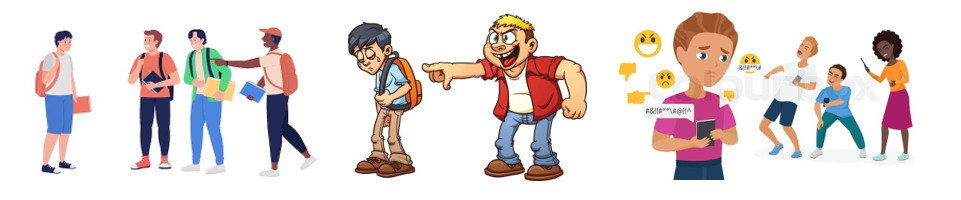
Emotional: hurting other people’s feelings, leaving you out.
Physical: punching, kicking, spitting, pushing, hitting, hair pulling, dragging along, sweeping off your feet, knocking into people.
Verbal: being teased, name calling or using hand signs.
Cyber: saying unkind things by text, email and online or sending unkind images.
Racist: calling you names because of the colour of your skin.
Homophobic: bullying someone because of their gender or sexuality; calling someone gay or lesbian to hurt their feelings would be homophobic.
Transphobic: bullying someone who identifies as trans – a person whose sense of identity and gender does not match with their birth sex.
Disablist: bullying someone because of a disability.
Sexist: bullying someone because of their sex (whether they are a boy or a girl).
Sexting: is sending inappropriate pictures, videos or messages – they can sometimes be called ‘rude pics’ or ‘nude selfies’.
Sexual harassment: sometimes people can act sexually towards each other, and it might make them feel uncomfortable. This can happen online, social media or face to face. It might make someone feel scared, uncomfortable or upset. For example, it could be someone making sexual comments, saying rude things, using sexual names or touching which makes you feel uncomfortable.
What to do if you are being bullied:
Ask them to STOP. Ignore them.
Find a member of staff.
Walk away.
Ask to speak to the member of the Pastoral team. Talk to a friend or a parent.
DON’T:
Do what the bully says. Get angry or upset.
Think that it’s your fault. Hide the problem.
Always remember it is not your fault, and you are never alone.
You shouldn’t be scared to talk to someone if you are being bullied.
Tell an adult straight away. Don’t stay silent or the bullying will keep on happening.
It is important you tell someone if you are being bullied, or you notice someone else being bullied.
Speaking to someone like your mum, dad, carer, or teacher will mean that we can make sure the bullying stops and doesn’t happen again.
If bullying is reported or suspected, it will be dealt with immediately by the member of staff.
The young people involved will be spoken to and an account of the incident will be taken.
This may involve talking to the young person about the behaviour, what happened and why it is wrong. The incident will be dealt with in line with the school’s Relationship for Learning & Behaviour policy and an agreed action will be put in place for any repeat of the same be-haviour.
Our aim is always to ensure a restorative process happens to allow both the bully and bullied to move on from the incident. This will be done with both of you when you are ready.
We aim to support both those who have been bullied to rebuild their self-esteem and confidence, as well as working with those who bully to be able to reflect on the impact they are having on other young people.
If you need support with bullying outside of school, below are a range of resources where you may be able to find the help you need.

Young Minds provides advice and support for you and your parents/carers on how to get help around bullying
https://www.youngminds.org.uk/young-person/coping-with-life/bullying/#Gettinghelpforbullying
ChildLine provides resources and a helpline for anyone who is a victim of any form of bullying.
https://www.childline.org.uk/info-advice/bullying-abuse-safety/
SHOUT provides a confidential messaging service where you can receive support around bullying.